Learn Photonic
Quantum Computing
for Free

Why Learn Quantum
Computing with Quandela?

What Is Quantum Computing?

Quantum computing uses the principles of quantum mechanics to process information differently from classical computers. While classical computers use bits representing either 0 or 1, quantum computers use quantum bits, or qubits, which can exist in superpositions of states.

This opens up new approaches to solving complex computational problems, with potential applications in fields such as chemistry, materials science, optimization and machine learning.

At Quandela, we take a photonic approach, using individual particles of light — photons — to process quantum information.

Learn from the People Building Quantum Computers

Go beyond the theory with free, self-paced quantum computing courses developed by Quandela's scientists and engineers.

Our Training Centre offers an exclusive look behind the scenes of building a photonic quantum computer. Discover how quantum-dot single-photon sources work, explore our photonic and spin-photon architectures, and understand how we are working towards fault-tolerant quantum computing.

The learning paths cover both the fundamental principles of quantum computing and their application to Quandela's technology, from generating single photons to programming quantum processors.

Whether you're a beginner, student, developer or industry professional, you can explore courses suited to your interests and experience. Beyond the courses, practical tutorials and interactive tools allow you to put your knowledge into practice.

Explore Our
Free Online
Quantum
Computing
Courses

From the fundamentals of quantum
computing to the challenges of
building fault-tolerant machines,
Quandela's free, self-paced courses
bring you closer to the science and
engineering behind photonic
quantum computing. Find your
starting point and follow the
subjects that interest you.

New to Quantum Computing?

Introduction to Quantum Computing

Level: Beginner

Quantum computing doesn't have to begin with complex equations. This short, non-technical course introduces the principles behind quantum information and explains what makes quantum computing different from classical computing. A starting point for anyone curious about the field.
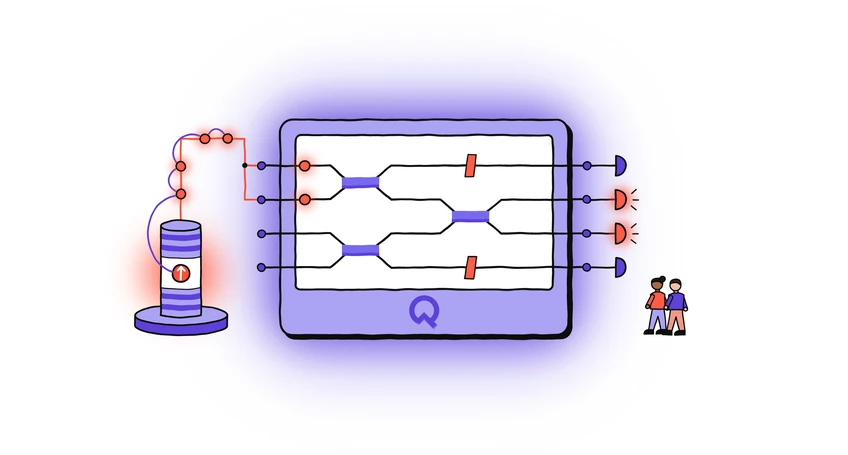
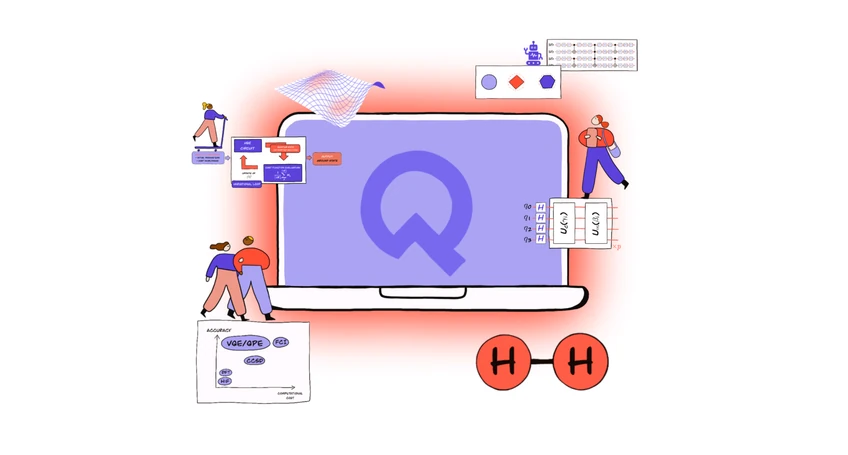
Step 1: Start with the Fundamentals

Fundamentals of Quandela's Technology

Level: Beginner to Intermediate

What does it take to build a photonic quantum computer? Go inside Quandela's technology to understand how photons become carriers of quantum information, how our spin-photon architecture works, and how experiments such as Hong–Ou–Mandel interference connect to real quantum computing applications. The course also introduces quantum machine learning.

We recommend Fundamentals as your starting point, although it is not a prerequisite for the advanced learning paths.

Step 2: Go Deeper with a Learning Path

Quantum Algorithms

Level: Intermediate

Quantum computing is not just about building new hardware. It also requires new ways of approaching computational problems. Learn how quantum algorithms work and examine their applications in quantum machine learning and quantum chemistry, where quantum methods offer new possibilities for scientific computation.

On the Road to Fault Tolerance

Level: Intermediate

Building a quantum computer is one challenge. Making it reliable is another. Understand why quantum errors occur, what fault tolerance means, and how quantum error correction can protect information as quantum systems scale. Explore Quandela's approach to one of the central challenges in quantum computing.

A Single Photon Source

Level: Intermediate

A photonic quantum computer begins with a single photon. Discover how Quandela uses quantum-dot technology to generate individual photons, why their properties matter, and what it takes to build a reliable single-photon source for quantum information processing.

Earn a Verifiable Certificate

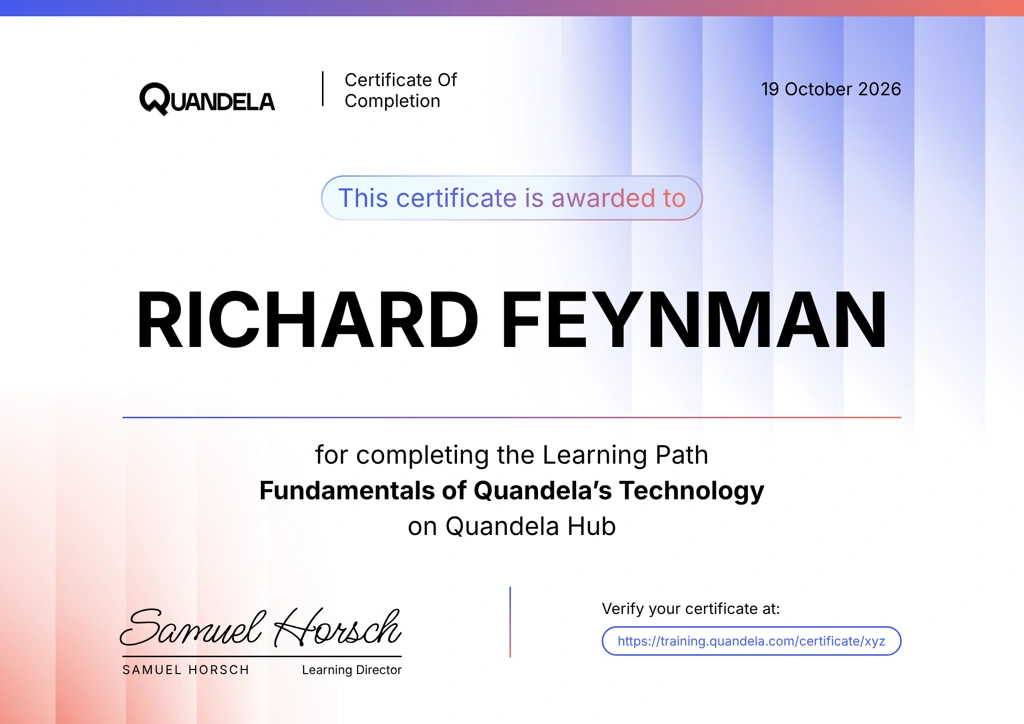
Sample certificate of completion from Quandela’s Training Centre

Showcase your quantum computing knowledge with a verifiable certificate from Quandela’s Training Centre.

Upon completing an eligible learning path, you can earn a certificate that recognizes your achievement and can be added to your LinkedIn profile or CV. Each certificate can be independently verified, allowing you to share your progress with employers, colleagues and your professional network.

Put Your Quantum
Computing Skills
into Practice

Go beyond the courses with hands-on tutorials and interactive tools
developed by Quandela. Explore photonic quantum computing, build
circuits and experiment with quantum machine learning.

Python Notebooks

Hong–Ou–Mandel
Experiment with Perceval

Explore two-photon interference
using a beam splitter, then run
the experiment on a photonic
quantum computer.

Quantum Reservoir
Classifier with MerLin

Train a classifier for handwritten
digits using features generated by
a photonic quantum processor.

Interactive Tools

Virtual Lab

Build photonic experiments
on a virtual optical table
directly in your browser.

Composer

Design photonic circuits
visually and generate the
corresponding Perceval code.

FAQ’s

About Quantum
Computing Courses

Which quantum computing course should I choose as a beginner?

If you're new to quantum computing, start with Introduction to Quantum
Computing, a short, non-technical course covering the fundamental
concepts. We then recommend Fundamentals of Quandela's Technology
for a closer look at photonic quantum computing and the technology
behind Quandela's quantum processors.

Can I learn quantum computing online for free?

Yes. Quandela offers free, self-paced online courses covering introductory quantum computing concepts, quantum algorithms, photonic hardware and fault-tolerant computing. You can choose courses based on your interests and experience level and complete them at your own pace.

Do I need a background in physics, mathematics or programming?

If you're new to quantum computing, start with Introduction to Quantum Computing, a short, non-technical course covering the fundamental concepts.

How long does it take to learn the basics of quantum computing?

Quandela's online courses take approximately 1 to 3 hours to complete, depending on the course. All courses are self-paced, so you can progress through the material at your own speed, without fixed schedules or deadlines.

Will I receive a certificate after completing a quantum computing course?

Upon completing an eligible learning path, you can earn a certificate that recognizes your achievement and can be added to your LinkedIn profile or CV. Each certificate can be independently verified, allowing you to share your progress with employers, colleagues and your professional network.