
Newsroom / Press release

Quandela renforce sa direction et sa gouvernance pour accélérer son passage à l’échelle industrielle

Cyril Dujardin rejoint l’entreprise en tant que Directeur général, Michel Zecri devient vice-Président Industrialisation et Michel Paulin est nommé Président du Conseil d’administration, une série de nominations qui visent à […]

Cyril Dujardin rejoint l’entreprise en tant que Directeur général, Michel Zecri devient vice-Président Industrialisation et Michel Paulin est nommé Président du Conseil d’administration, une série de nominations qui visent à accélérer le déploiement international de l’informatique quantique photonique.

Massy, France – 29 mai 2026 – Quandela, leader de l’informatique quantique photonique, annonce aujourd’hui un renforcement majeur de son équipe dirigeante et de sa gouvernance avec l’arrivée de Cyril Dujardin en tant que Directeur général et de Michel Zecri en tant que vice-Président Industrialisation. Michel Paulin, ancien Directeur général d’OVHcloud, SFR et Neuf Cegetel, devient Président du Conseil d’administration.

Ces nominations marquent une nouvelle étape dans le développement de Quandela. Alors que le secteur du quantique entre dans une phase de déploiement, de passage à l’échelle et d’industrialisation, les enjeux portent désormais autant sur la capacité d’exécution que sur la performance scientifique : industrialisation de technologies complexes, structuration des opérations internationales, sécurisation des chaînes d’approvisionnement, accompagnement des déploiements clients et montée en échelle des infrastructures.

Avec Cyril Dujardin, Michel Zecri et Michel Paulin, Quandela renforce les capacités opérationnelles, industrielles et de gouvernance nécessaires pour accélérer le déploiement international de ses systèmes quantiques photoniques sur des plateformes cloud, dans des centres de données, des environnements de calcul haute performance (HPC), des instituts de recherche et auprès de clients industriels.

« L’informatique quantique entre aujourd’hui dans une phase où la capacité à industrialiser et déployer les technologies devient aussi importante que les avancées scientifiques », déclare Niccolò Somaschi, cofondateur et CEO de Quandela. « Quandela a construit une position unique dans l’informatique quantique photonique, avec des systèmes conçus pour des environnements réels et une feuille de route claire vers le calcul quantique tolérant aux erreurs. L’arrivée de Cyril Dujardin et Michel Zecri, ainsi que la nomination de Michel Paulin à la présidence du Conseil, nous donnent les moyens opérationnels et industriels nécessaires pour accompagner notre changement d’échelle. »

Cyril Dujardin (50 ans) apporte plus de 25 ans d’expérience de direction dans les domaines de la deeptech, de la cybersécurité, de la défense, des infrastructures critiques et des technologies souveraines. Il a dirigé de grandes organisations internationales, piloté d’importants centres de profit et conduit des transformations complexes, notamment chez Atos et Eutelsat/OneWeb. En tant que Directeur général, il supervisera les opérations mondiales de Quandela et accompagnera l’exécution de la stratégie de l’entreprise dans les domaines du produit, de la R&D, du développement commercial, des partenariats et des déploiements clients.


« Quandela se trouve à un moment clé de son développement : une technologie de pointe doit désormais s’appuyer sur une organisation capable de la déployer à grande échelle », déclare Cyril Dujardin, Directeur général de Quandela. « Mon objectif sera d’accompagner la croissance de l’entreprise avec une organisation claire, rapide et fiable, en alignant recherche, produit, développement commercial et déploiement client afin de répondre aux attentes des marchés industriels, institutionnels et internationaux. »

Michel Zecri (54 ans) rejoint Quandela avec plus de 20 ans d’expérience dans la direction industrielle d’environnements technologiques de pointe, notamment dans les semi-conducteurs, les technologies infrarouges, l’aéronautique et la défense. Il a occupé des fonctions de direction des opérations et de direction générale chez Freescale/Motorola, Sofradir/Lynred et Rakon, où il a piloté des équipes multisites ainsi que des transformations industrielles de grande ampleur, de la R&D à la production.


En tant que vice-Président Industrialisation, Michel Zecri pilotera la montée en puissance industrielle des plateformes et composants quantiques de Quandela afin d’en faire des produits manufacturables, fiables et optimisés en coût. Son périmètre couvrira les opérations de production, les processus industriels, la résilience de la chaîne d’approvisionnement, les systèmes qualité, la conformité, les opérations hardware et le support client.

« Le passage à l’échelle du hardware quantique exige une rigueur industrielle à tous les niveaux : conception orientée fabrication, maîtrise des procédés, stratégie fournisseurs, qualité, fiabilité et support sur l’ensemble du cycle de vie », explique Michel Zecri, vice-Président Industrialisation de Quandela. « L’approche photonique de Quandela présente un fort potentiel pour un déploiement à grande échelle, et je suis heureux de contribuer à transformer cet avantage technologique en plateforme industrielle reproductible. »
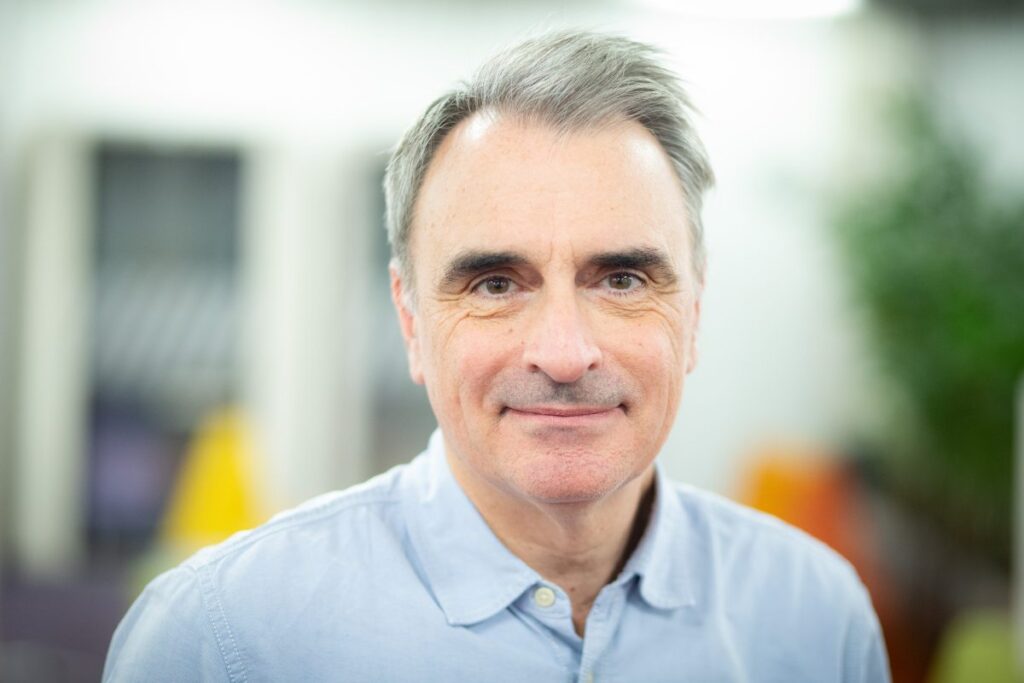
Michel Paulin (65 ans), qui avait rejoint le Conseil d’administration de Quandela en 2025, en devient le Président. Figure reconnue du secteur numérique, il apporte une vaste expérience dans le cloud, les télécommunications, les infrastructures numériques souveraines, l’expansion internationale et les entreprises technologiques en forte croissance. En tant que Président du Conseil d’administration, il accompagnera la stratégie de long terme de Quandela, sa gouvernance et son positionnement dans l’écosystème mondial du quantique.


« Quandela bénéficie d’une recherche de premier plan, d’une feuille de route produit pragmatique et d’une position stratégique européenne dans l’une des technologies les plus structurantes des prochaines décennies », déclare Michel Paulin, Président du Conseil d’administration de Quandela. « Mon rôle sera d’aider l’entreprise à transformer cette position en leadership international durable, avec les standards de gouvernance, de partenariat et d’exécution attendus d’un acteur technologique mondial. »

Ce renforcement de l’équipe dirigeante intervient après plusieurs étapes importantes pour Quandela, parmi lesquelles l’extension de son offre d’informatique quantique accessible via le cloud, le déploiement de systèmes quantiques photoniques dans des environnements réels et le développement de partenariats stratégiques en Europe et en Asie. Ensemble, ces nominations reflètent l’ambition de Quandela de bâtir non seulement une technologie quantique de pointe, mais aussi l’organisation industrielle capable de la déployer à grande échelle.

À propos de Quandela

Quandela est un leader mondial de l’informatique quantique, concevant, construisant et fournissant des solutions quantiques de pointe pour la recherche et l’industrie. Son offre comprend les ordinateurs quantiques les plus économes en énergie pour les centres de données, des solutions d’informatique quantique « full-stack » accessibles via le cloud, ainsi que des services d’accès à des algorithmes pour les clients universitaires et industriels. Suivant une feuille de route pragmatique et progressive, Quandela déploie des systèmes de niveau industriel depuis 2023 tout en développant les futures générations d’ordinateurs quantiques tolérants aux pannes, capables d’évoluer grâce à l’intégration de milliers de composants photoniques. Quandela s’engage à rendre l’informatique quantique accessible à tous afin de relever les défis industriels et sociétaux les plus complexes. Pour en savoir plus : https://www.quandela.com/

Contacts presse

자세히 알아보기

Read more

Quandela and Quanova sign strategic partnership to build quantum capabilities in Vietnam

×

Announced during the Vietnam–France Leaders Forum, in presence of Vietnamese General Secretary and President Tô Lâm and French President Emmanuel Macron, the agreement combines Quandela’s full-stack photonic quantum computing platform with Quanova’s local integration capabilities, backed by strategic investment from Nam A Bank, to develop talent, infrastructure and concrete quantum use cases in Vietnam.

Paris, 11 September 2026 Quandela, a European leader in photonic quantum computing, and Quanova, a Vietnamese quantum technology and ecosystem development company, announce the signing of a strategic partnership agreement aimed at supporting the long-term development of quantum computing capabilities in Vietnam.

The agreement was formalized during the Vietnam–France Leaders Forum, held in the presence of French President Emmanuel Macron and General Secretary and President of Vietnam Tô Lâm as part of his official visit to France.

Under the agreement, Quanova will act as a strategic integrator for Quandela in the Vietnamese market. The two companies will work together to promote, develop and commercialize solutions based on Quandela’s photonic quantum computing technology.

Their collaboration will include the training of Quanova’s technical and commercial teams, the development of joint offerings, customer engagement and demonstrations, and the identification of relevant use cases with Vietnamese universities, research organizations and businesses.

“Vietnam is emerging as one of Southeast Asia’s most dynamic quantum ecosystems. Our ambition is to help turn this momentum into lasting capabilities: trained talent, access to photonic quantum computing and concrete projects for universities, research institutions and businesses,” said Niccolo Somaschi, co-founder and CEO of Quandela. “Quanova’s strong local roots and expertise as a strategic integrator make it the right partner to build this bridge with us.”

The agreement builds on several initiatives already undertaken by Quandela and its Vietnamese partners. With Quanova and other local stakeholders, Quandela recently supported a quantum hackathon organised by VNQuantum and the province of Gia Lai, focused on applications connected to Vietnam’s development priorities.

One of the first concrete initiatives supported by the partnership with Quanova is the quantum technology training programme at Quang Trung University, backed by Nam A Bank as a strategic investor. The programme aims to train students and researchers while expanding their access to quantum computing capabilities.

“Vietnam’s opportunity in quantum will be built through real capabilities: trained teams, access to world-class platforms and projects connected to local needs,” said Rossy Nguyen Hoang Hong Nhung, CEO of Quanova. “Working with Quandela will help Vietnamese organizations move from initial exploration to concrete applications, while strengthening the national ecosystem for the long term.”

The two companies also share the ambition of preparing for the future deployment of a photonic quantum computer in Vietnam. Their approach is based on ensuring that any future infrastructure is supported by the skills, software and local ecosystem required to use it effectively and create long-term value.

The agreement signed in Paris provides a framework for developing joint offerings and new opportunities with Vietnamese stakeholders. Quandela and Quanova expect to announce further concrete steps in the coming months.

About Quandela

Quandela is a leading quantum computing company that designs, builds, and delivers cutting-edge quantum solutions for industry: ready-to-use quantum computers for data centres, cloud-accessible quantum processors, and algorithm access services for industrial clients. Quandela is committed to making quantum computing accessible to all in order to address the most complex industrial and societal challenges.

Discover our vision at: Quandela | Leading Photonic Quantum Computing Solutions

About Quanova

Founded in 2025, Quanova is a Vietnamese quantum technology and innovation company focused on education, quantum-readiness consulting, ecosystem building and international collaboration. The company works to connect research, industry and talent development to support the emergence of quantum capabilities in Vietnam.

For more information: www.quanova.org

Media Relations

Maarc PR agency

Read more

Quandela becomes the first photonic platform in Canada’s cloud-accessible Quantum Computing Sandbox

×

Established in Canada, Quandela’s photonic quantum computer is the only device of its kind available to companies participating in this Canada-wide research and development program.

MONTREAL, September 2, 2026 – Quandela, a leading player in photonic quantum computing technologies, has signed a memorandum of understanding with CMC Microsystems to join the Quantum Computing Sandbox as a provider of cloud-based computing services. Quandela’s expertise, based within the country, now joins forces with other providers to offer a comprehensive suite of quantum options made available to small and medium-sized enterprises, organizations, and academic researchers, with the aim of developing and accelerating the solutions that will be applied to a wide range of fields and needs.

“As data sovereignty in the digital realm becomes an increasingly important issue given the current global context, we are proud to be the first to include a Canada-based photonic quantum computer among the cloud computing options available to the participants of the QCS program”, stated physicist Valérian Giesz, Co-Founder and Director of Strategic Partnerships at Quandela. “This will allow their work and data to be entirely hosted on Canadian soil, without having to go through a structure located in another country.”

The Quantum Computing Sandbox (QCS) is supported by FABRiC, an organization funded by Innovation, Science and Economic Development Canada (ISED), whose mission is to build an ecosystem which strengthens Canada’s semiconductor sector. QCS’ role, through technical support and research grants, is to foster the development of quantum applications for Canada’s various industrial sectors and fields of activity, including national and strategic projects. CMC Microsystems is the nonprofit organization responsible for managing FABrIC on behalf of the Government of Canada; its mandate is to facilitate affordable access to the tools required for the development of advanced technologies.

Multifaceted support

The memorandum of understanding between Quandela and CMC Microsystems also includes a provision to provide support to companies and organizations whose high-potential projects have been selected, thus granting them access to the Quantum Computing Sandbox. This assistance, which may be both technical and practical in nature, will be offered by Quandela in collaboration with CMC Microsystems. The latter is directly involved in selecting the companies eligible for a grant.

As Quandela and CMC Microsystems already have a well-established relationship, the framework of the QCS program will enable the two entities to further share their expertise and experience with companies, organizations, and universities which do not have teams or personnel sufficiently trained in the rules and requirements of quantum computing.

“Since the algorithms used in certain projects perform better on certain specific computing architectures, integrating Quandela as an additional tool further diversifies the options made available to the participants who have access to QCS, whether in terms of research, prototyping, or implementing solutions,” added Valérian Giesz. “This is what makes the QCS model even more attractive to companies looking to invest not only in the development of quantum solutions, but also in the development of quantum computing itself.”

About Quandela

Quandela is a global leader in quantum computing which designs, builds, and delivers cutting-edge quantum solutions for research and industry, offering the most energy-efficient quantum computers for data centres, comprehensive quantum computing solutions accessible through the cloud, and algorithm access services for academic and industrial customers. Quandela follows a pragmatic and incremental approach, installing industrial systems since 2023 and developing future generations of fault-tolerant quantum computers capable of scaling up through the integration of thousands of photonic components. Quandela is committed to making quantum computing accessible to all in order to address the most complex industrial and societal challenges.

Media Relations:

Read more

Quandela Validates Low-Latency Photonic QPU Integration with NVIDIA Accelerated Computing​

×

Hamburg, Germany – June 23, 2026 – Quandela today announced that it has experimentally validated a low-latency integration path between photonic quantum processors and NVIDIA ​AI​​ infrastructure, marking an important milestone toward bringing quantum processing units directly into high-performance computing environments. Results presented at ISC 2026 demonstrate a path toward accelerator-style integration of photonic quantum processors in GPU-driven HPC environments.

The results show how a Quandela photonic QPU can be integrated with an NVIDIA GPU host and an FPGA-based Quantum System Controller through ​​NVIDIA NVQLink. More than a simple interconnect, NVQLink provides a hardware-and-software architecture for low-latency, real-time communication between GPU supercomputing infrastructure ​and quantum system controllers. The validation supports a new execution model for hybrid quantum-classical computing: moving beyond remote quantum access toward collocated quantum acceleration inside HPC infrastructure.

Today, most quantum processors are accessed through cloud APIs, job queues and orchestration layers. This approach remains valuable for experimentation and batch execution, but its asynchronous nature introduces latency that limits workflows requiring real-time responses inside AI or HPC pipelines.

Quandela’s results address this bottleneck. By measuring low-latency communication between GPU infrastructure and the FPGA-based Quantum System Controller, the company has validated a practical route for photonic QPUs to participate more directly in GPU-driven workloads.

“This is not just a demonstration of connectivity,” said Jean Senellart, Chief Technology & Product Officer at Quandela. “This validation confirms a technical path toward integrating photonic QPUs into the HPC accelerator stack. For the HPC community, the important shift is that quantum processors can start to be treated less like remote experimental instruments and more like accelerators deployed alongside GPUs.”

The validation is based on a collocated architecture combining NVIDIA accelerated computing and networking ​with an FPGA-based Quantum System Controller connected to a Quandela photonic QPU. In this model, existing HPC schedulers remain responsible for reservation, allocation and accounting, while the active GPU–QPU session is designed to avoid repeated traversal of the full cloud-style orchestration path.

The first target workloads are in photonic Quantum Machine Learning, including quantum reservoir computing, quantum feature maps and hybrid neural-network architectures. These workloads are particularly well suited to the architecture because many photonic circuits can remain configured during inference, while new data points require only lightweight updates before measurement.

This is where photonics offers a distinctive advantage. For selected QML workloads, the same optical configuration can be reused across many inference calls, while new data points require only lightweight updates before measurement. Combined with fast photonic sampling, this makes system-level latency – not only quantum execution time – a decisive factor in performance, which is why​ the low-latency interaction model enabled by NVQLink is​ crucial for successful operation​.

Quandela’s MerLin framework provides the software environment used to design, simulate, benchmark and validate these hybrid photonic QML workflows. The work also builds on Quandela’s MosaiQ photonic quantum computing platform, whose current systems are designed with FPGA-based control capabilities aligned with the Quantum System Controller model defined by NVIDIA​ ​NVQLink.

​For HPC centers, sovereign AI and quantum programs, advanced research organizations and industrial users, the validation points toward a future deployment model in which a customer-owned photonic QPU could be installed on-premise or in a dedicated data center environment and connected to NVIDIA accelerated computing infrastructure​.​

“​Tightly integrating quantum systems with accelerated computing is proving hugely impactful for quantum research,” said Sam Stanwyck, Director of Quantum Product at NVIDIA. “Quandela’s work with NVQLink shows how quantum-GPU supercomputing systems will fundamentally transform how we are able to think about computing applications when information can be passed seamlessly between different processors.”​

This announcement marks a technical validation milestone toward low-latency GPU–QPU integration, paving the way for future NVQLink-enabled MosaiQ deployments.

Beyond near-term hybrid AI and QML workloads, the same integration principles are relevant to future quantum computing architectures, where QPUs, FPGA-based control systems and GPU-accelerated infrastructure will need to operate in tightly coordinated environments. Low-latency GPU–QPU integration is therefore both a near-term enabler and a foundation for future hybrid quantum-classical computing systems.

Quandela will present these results at ISC High Performance 2026 in Hamburg on 23 June 2026.

About Quandela

Quandela is a global leader in quantum computing, designing, building, and delivering cutting-edge quantum solutions for research and industry. Its offerings include the most energy-efficient quantum computers for data centers, full-stack quantum computing solutions accessible via the cloud, and algorithm access services for academic and industrial customers. Following a pragmatic, step-by-step roadmap, Quandela has been deploying industrial-grade systems since 2023 while developing future generations of fault-tolerant quantum computers capable of scaling through the integration of thousands of photonic components. Quandela is committed to making quantum computing accessible to all in order to address the most complex industrial and societal challenges.

Learn more at: Quandela | Leading Photonic Quantum Computing Solutions

Media Relations

Maarc PR agency