

Hamburg, Germany – June 22, 2026 – Quandela today announced that it has experimentally validated a low-latency integration path between photonic quantum processors and NVIDIA AI infrastructure, marking an important milestone toward bringing quantum processing units directly into high-performance computing environments. Results presented at ISC 2026 demonstrate a path toward accelerator-style integration of photonic quantum processors in GPU-driven HPC environments.
The results show how a Quandela photonic QPU can be integrated with an NVIDIA GPU host and an FPGA-based Quantum System Controller through NVIDIA NVQLink. More than a simple interconnect, NVQLink provides a hardware-and-software architecture for low-latency, real-time communication between GPU supercomputing infrastructure and quantum system controllers. The validation supports a new execution model for hybrid quantum-classical computing: moving beyond remote quantum access toward collocated quantum acceleration inside HPC infrastructure.
Today, most quantum processors are accessed through cloud APIs, job queues and orchestration layers. This approach remains valuable for experimentation and batch execution, but its asynchronous nature introduces latency that limits workflows requiring real-time responses inside AI or HPC pipelines.
Quandela’s results address this bottleneck. By measuring low-latency communication between GPU infrastructure and the FPGA-based Quantum System Controller, the company has validated a practical route for photonic QPUs to participate more directly in GPU-driven workloads.
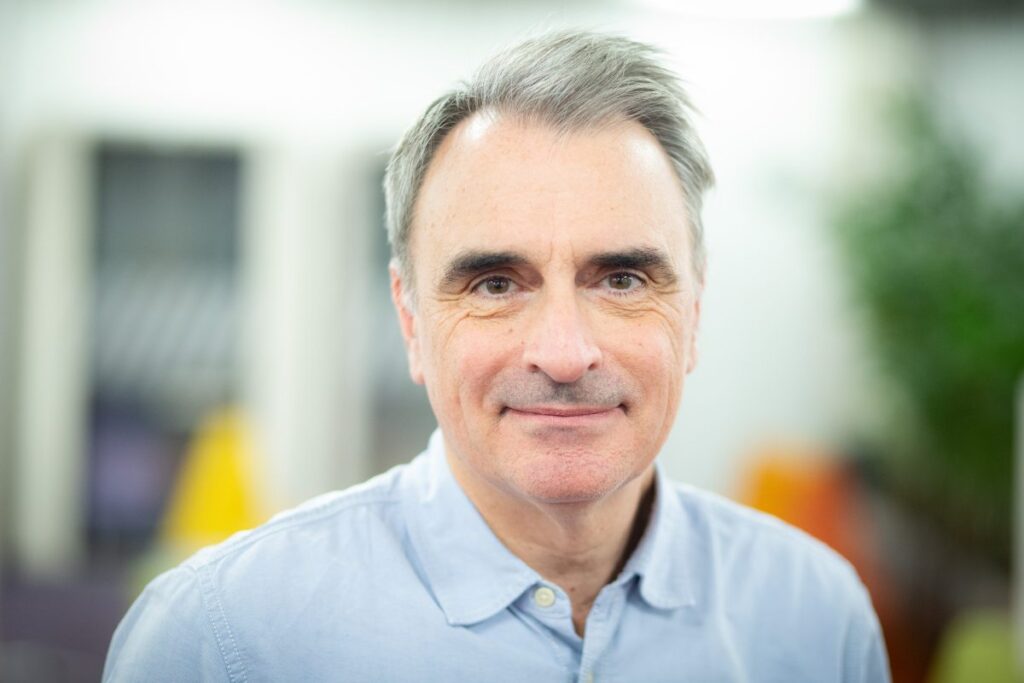
“This is not just a demonstration of connectivity,” said Jean Senellart, Chief Technology & Product Officer at Quandela. “This validation confirms a technical path toward integrating photonic QPUs into the HPC accelerator stack. For the HPC community, the important shift is that quantum processors can start to be treated less like remote experimental instruments and more like accelerators deployed alongside GPUs.”
The validation is based on a collocated architecture combining NVIDIA accelerated computing and networking with an FPGA-based Quantum System Controller connected to a Quandela photonic QPU. In this model, existing HPC schedulers remain responsible for reservation, allocation and accounting, while the active GPU–QPU session is designed to avoid repeated traversal of the full cloud-style orchestration path.
The first target workloads are in photonic Quantum Machine Learning, including quantum reservoir computing, quantum feature maps and hybrid neural-network architectures. These workloads are particularly well suited to the architecture because many photonic circuits can remain configured during inference, while new data points require only lightweight updates before measurement.
This is where photonics offers a distinctive advantage. For selected QML workloads, the same optical configuration can be reused across many inference calls, while new data points require only lightweight updates before measurement. Combined with fast photonic sampling, this makes system-level latency – not only quantum execution time – a decisive factor in performance, which is why the low-latency interaction model enabled by NVQLink is crucial for successful operation.
Quandela’s MerLin framework provides the software environment used to design, simulate, benchmark and validate these hybrid photonic QML workflows. The work also builds on Quandela’s MosaiQ photonic quantum computing platform, whose current systems are designed with FPGA-based control capabilities aligned with the Quantum System Controller model defined by NVIDIA NVQLink.
For HPC centers, sovereign AI and quantum programs, advanced research organizations and industrial users, the validation points toward a future deployment model in which a customer-owned photonic QPU could be installed on-premise or in a dedicated data center environment and connected to NVIDIA accelerated computing infrastructure.
“Tightly integrating quantum systems with accelerated computing is proving hugely impactful for quantum research,” said Sam Stanwyck, Director of Quantum Product at NVIDIA. “Quandela’s work with NVQLink shows how quantum-GPU supercomputing systems will fundamentally transform how we are able to think about computing applications when information can be passed seamlessly between different processors.”
This announcement marks a technical validation milestone toward low-latency GPU–QPU integration, paving the way for future NVQLink-enabled MosaiQ deployments.
Beyond near-term hybrid AI and QML workloads, the same integration principles are relevant to future quantum computing architectures, where QPUs, FPGA-based control systems and GPU-accelerated infrastructure will need to operate in tightly coordinated environments. Low-latency GPU–QPU integration is therefore both a near-term enabler and a foundation for future hybrid quantum-classical computing systems.
Quandela will present these results at ISC High Performance 2026 in Hamburg on 23 June 2026.
About Quandela
Quandela is a global leader in quantum computing, designing, building, and delivering cutting-edge quantum solutions for research and industry. Its offerings include the most energy-efficient quantum computers for data centers, full-stack quantum computing solutions accessible via the cloud, and algorithm access services for academic and industrial customers. Following a pragmatic, step-by-step roadmap, Quandela has been deploying industrial-grade systems since 2023 while developing future generations of fault-tolerant quantum computers capable of scaling through the integration of thousands of photonic components. Quandela is committed to making quantum computing accessible to all in order to address the most complex industrial and societal challenges.
Learn more at: Quandela | Leading Photonic Quantum Computing Solutions
Media Relations
Maarc PR agency
- Iva Baytcheva, iva.baytcheva@maarc.fr +33(0)6.28.59.07.03
- Charles Courbet, charles.courbet@maarc.fr +33(0)6.28.93.03.06